In 2025, we saw a lot of shifts in the sustainability landscape. The U.S. released its first mandatory climate reporting rule in California under SB 219, and the business case for taking action on sustainability became clearer than ever.
At Good.Lab, we remained laser-focused on helping our mid-market clients meet compliance needs and build competitive advantage through sustainability – while holding ourselves to the same standards of sustainability progress as a company.
As we reflect on 2025, we wanted to share where we focused, what we built, and how we plan to continue supporting our clients as they begin compliance in 2026 and beyond.
Where We Focused in 2025
Given the pace of regulatory change and rising sustainability expectations from clients, we concentrated our efforts in four areas:
- Client readiness for climate regulation: Supporting clients in preparing for the California Climate Rules and other emerging regulations, with a focus on credible, audit-ready disclosures.
- Leading by example: Strengthening our own sustainability performance to the same standards we advise on. This includes maintaining our Certified B Corporation status and completing our own EcoVadis assessment to ensure accountability, transparency, and continuous improvement.
- Product execution and AI-enabled workflows: Advancing our product to deliver faster insights, more streamlined reporting, and simplified workflows through continued investment in automation and AI-enabled capabilities.
- Trust, security, and governance: Building confidence as a baseline requirement by safeguarding client data and strengthening internal controls. In 2025, this included achieving SOC 2 compliance to reinforce our commitment to security, reliability, and governance.
Good.Lab’s Sustainability Progress
We continued to accelerate our own sustainability performance and sought external validation of our progress through B Corp and EcoVadis. As 1% for the Planet company, we have given 1% of our revenue away to causes close to our hearts every year we have been in operation.
B Corp Recertification
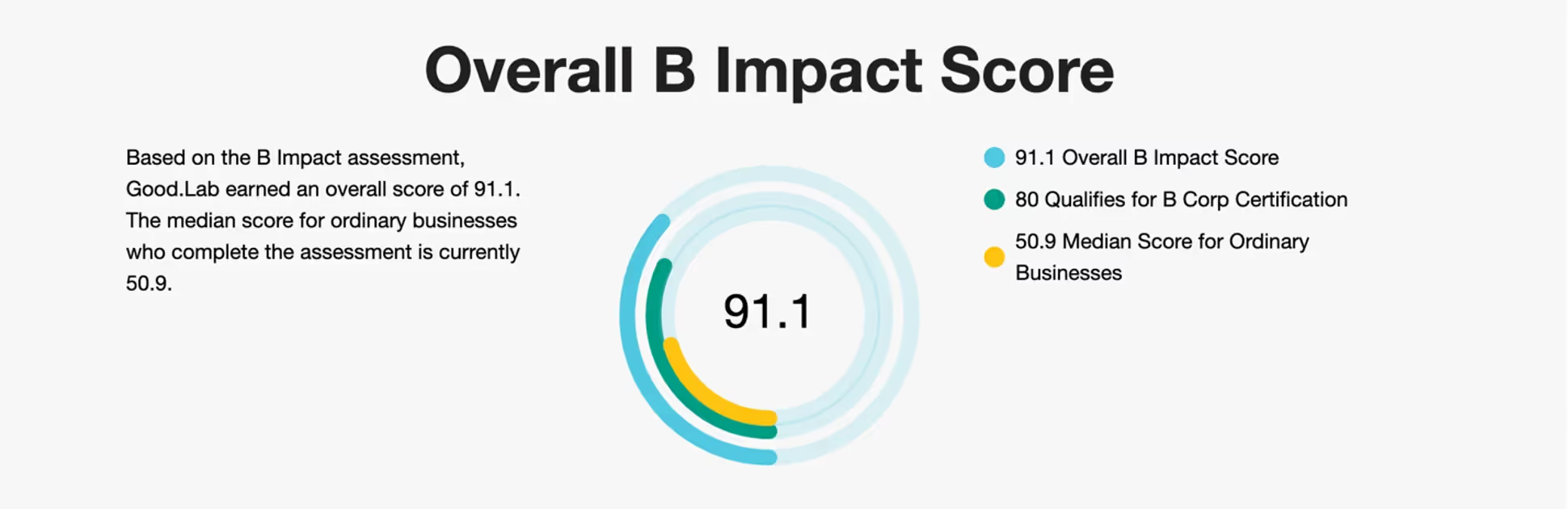
Since becoming a Certified B Corporation in 2022, we have increased our B Impact Score by nearly 10 points, reflecting incremental improvements across governance, workers, community, and environmental practices.
Improved EcoVadis Score
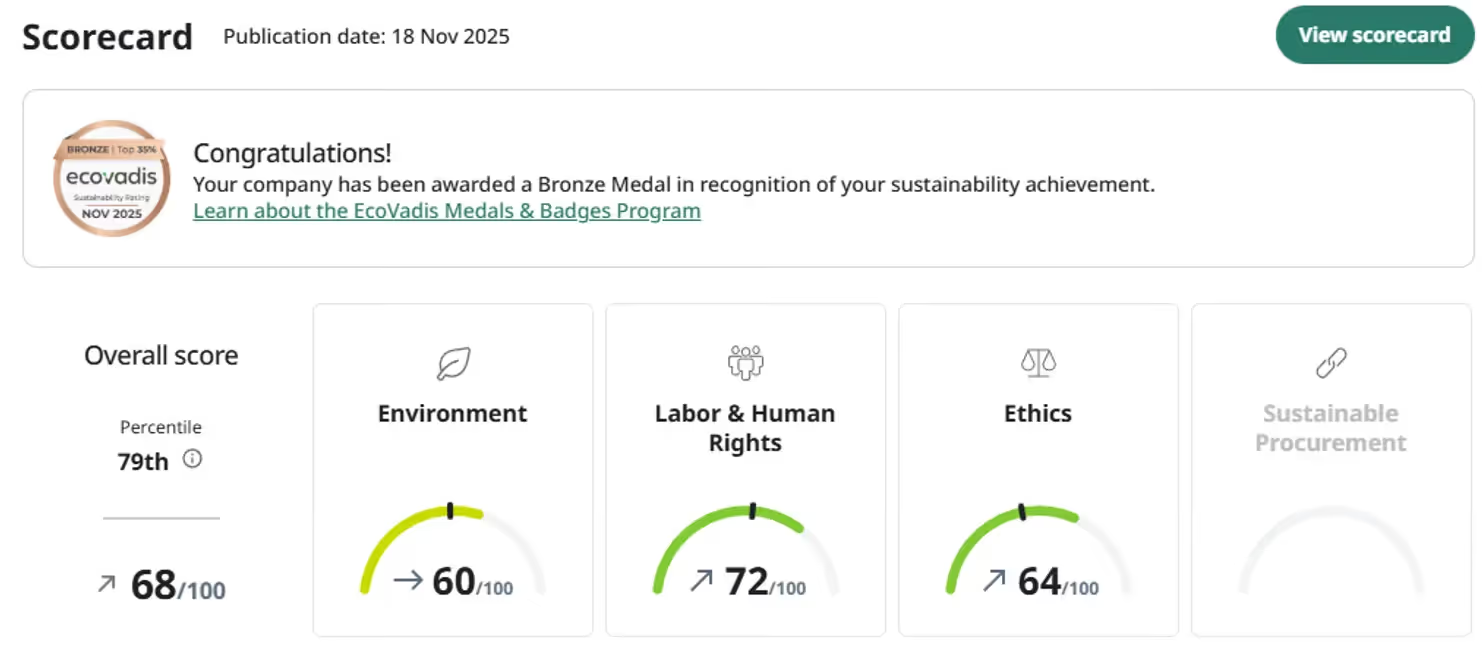
In 2025, we also improved our EcoVadis score by 8 points, moving from the 73rd to the 79th percentile and earning a Bronze medal again. The improvement reflects greater maturity in policies, documentation, and their execution, strengthening performance against a benchmark now used by more than 150,000 companies globally to evaluate supplier sustainability across environmental, labor, ethics, and procurement criteria.
Giving and Employee Engagement
Good.Lab participates in 1% for the Planet. We allocate a fixed amount to each employee to donate to a charity of their choice on their birthday. This year, we have donated thousands of dollars to a dozen nonprofit organizations, including a $10,000 contribution toward Hurricane Melissa relief efforts. We also offer each of our employees one paid day of volunteering service per quarter.
Supporting Client Readiness for Climate Reporting
The most significant climate impact Good.Lab had in 2025 was enabling our clients to meet both voluntary and mandatory climate reporting requirements.
In 2025, California’s climate rules created both urgency and uncertainty. Many organizations faced challenges interpreting the rules' applicability, prioritizing actions based on what it would take to comply, and obtaining the required information for timely disclosure.
To address this, we provided timely, accurate summaries of the rules as they evolved throughout the year and advised companies on next steps. Additionally, we supported companies in ensuring they had TCFD-aligned climate risk reports and audit-ready Scope 1 and 2 emissions disclosures required for compliance in 2026.
Product Updates Focused On Client Needs
Throughout the year, we invested heavily in improving our platform’s functionality, performance, and security. By adopting AI and enhancing select features, we attracted more customers to the platform, processing approximately 24,363,903 tonnes of CO2e.
1. AI Integration
In 2025, we expanded our platform’s AI capabilities through targeted automations designed to reduce manual work and accelerate insights. These enhancements included:
- Automated data extraction from uploaded utility bills
- AI-assisted classification of spend data to reduce manual categorization
- Automated benchmarking for California’s Climate Risk Rule (SB 261), providing companies with straightforward access to peers’ reports they can reference and replicate
2. Product Improvements
We made the platform more user-friendly through a series of targeted upgrades, including a simplified structure and navigation, automated emissions workflows, and clearer language.
We also launched several new modules and capabilities, such as a Targets Module for forecasting and testing emissions reduction scenarios, and a Climate Regulation Solution road mapping feature to plan and track progress over time
Users can now automate content creation based on the data they have on the platform for both sharing with stakeholders and compliance.
- Automatically generated PowerPoint presentations incorporating client data
- Assurance-ready Excel downloads detailing emissions inputs, factors, and conversions
- Full export of all client-uploaded files to support audit trails
3. Trust, Security, and Governance
Trust and data protection are foundational requirements for many of our clients, and something we take very seriously. In 2025, our software and internal systems underwent a third-party penetration test that yielded strong results. We also achieved SOC 2 compliance, now a baseline expectation for many organizations evaluating sustainability software and advisory partners.
Looking Ahead to 2026 and Beyond for Sustainability Progress
In the coming year, we are focused on:
- Continuing to develop our Climate Regulation Solution to further streamline compliance for clients navigating evolving requirements (including SB 253, SB 261, and more).
- Building on our sustainability performance to achieve higher EcoVadis scores and deepen our impact across environmental, labor, ethics, and procurement practices.
- Further enhancing our platform to simplify our clients’ sustainability journey and improve access to the data they need to share with regulators, customers, and other stakeholders.
If you want to follow our journey into 2026 and keep up to date with California’s Climate Rules and other sustainability trends, subscribe to our monthly newsletter.
Thank you for being part of this work, and warm wishes for the holiday season and new year!