SUPPORTING LEADING COMPANIES SETTING SCIENCE-BASED TARGETS
ABOUT EPR COMPLIANCE
SBTi isn't just for large enterprises anymore.
Mid-market companies across manufacturing and industrial sectors are being asked by customers to measure emissions and set science-aligned targets, whether they're ready or not.
The new SBTi Corporate Net-Zero Standard V2.0, released in June 2026, makes this more accessible for smaller companies.
MEDIAN COMPANY REVENUE COMMITTING TO SBTI
$3.6B
2020
$1.3B
2024
WHAT CHANGED IN V2.0
Scope 3 targets now optional for smaller Category B companies
Third-party assurance required only for larger Category A companies
24 months to submit after committing (smaller companies)
COMPANIES WITH VALIDATED SBTI TARGETS
Cut emissions at 8.8% per year, reducing energy costs and strengthening their position with customers and investors.
Source: SBTi Annual Progress Report
WHY GOOD.LAB
Good.Lab’s GHG target setting process and timeline.
6 - 10 WEEKS
Build the GHG baseline
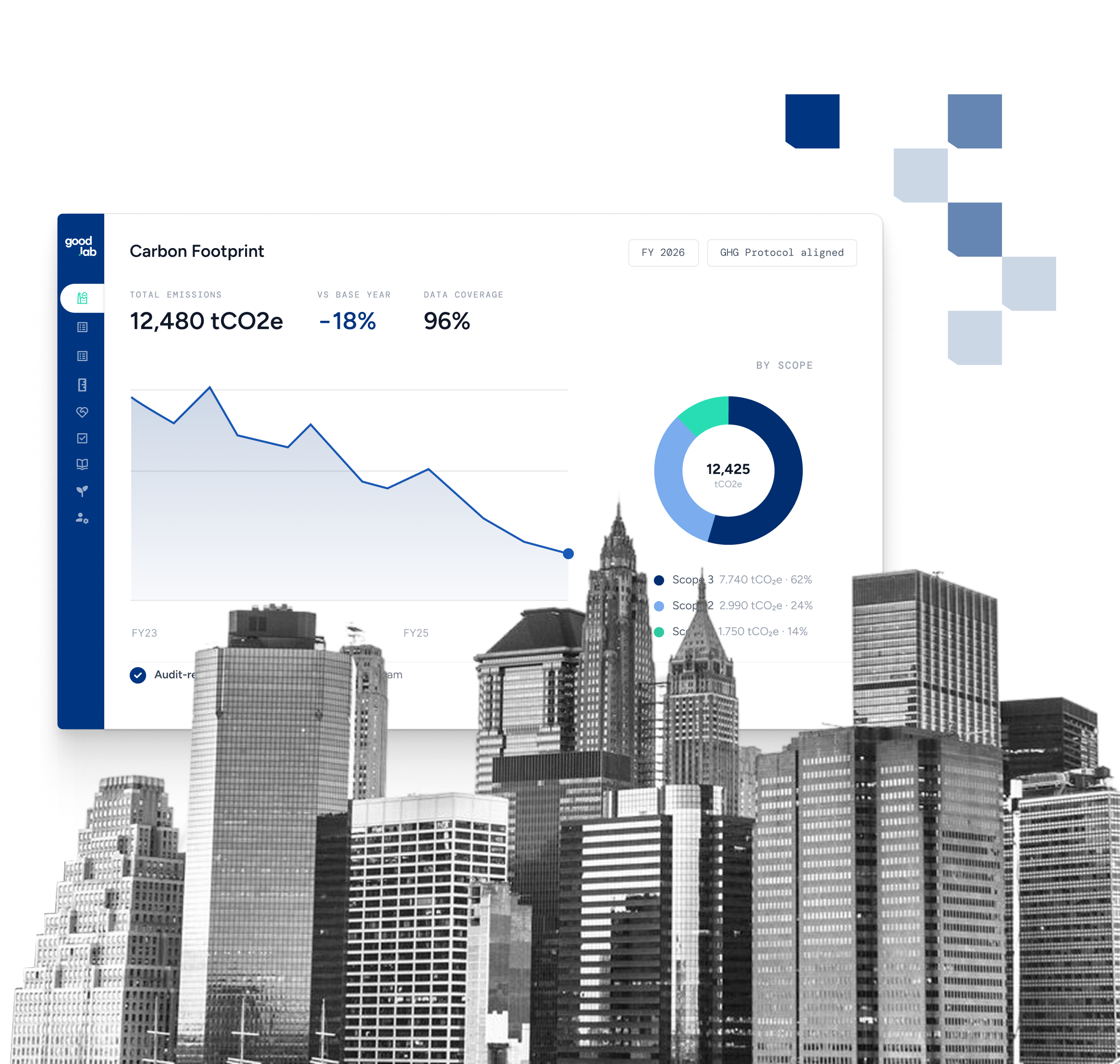
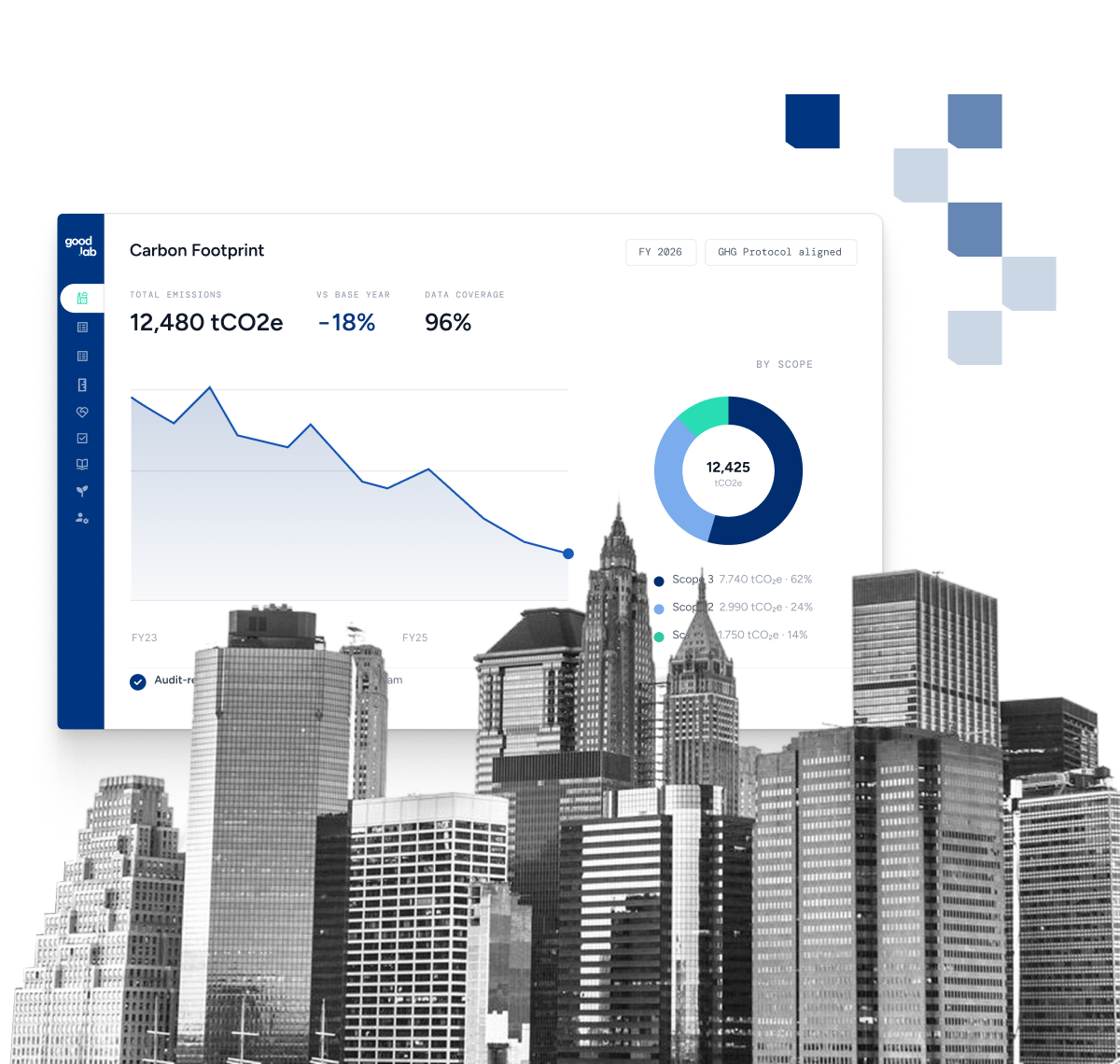
We develop a complete, audit-ready Scope 1, 2, and 3 inventory using GHG Protocol methodology – the foundation everything else rests on.
2 - 4 WEEKS
Set The Target
We evaluate your pathway options, determine your category under V2.0, run reduction scenarios, and set targets that meet SBTi criteria you can actually defend.
2 - 4 WEEKS
Submit and validate
We prepare the package, manage the SBTi review, respond to reviewer questions, and keep the process moving through validation.
ONGOING
Track and report
We build the data infrastructure to monitor progress year over year, satisfy disclosure frameworks, and flag where you're on track.
why partner with good.lab
The expertise to set a target. The data to defend it.
















.svg)