




EPR compliance isn't optional. Neither is getting it right.
Extended Producer Responsibility laws are active in seven US states and expanding. Obligations are growing, the data demands are real, and the landscape keeps shifting — making early preparation the difference between ready and reactive.


End-to-end support for EPR compliance.
EPR laws require producers to take responsibility for the end-of-life impact of their packaging. Good.Lab helps you meet those requirements across every state you sell into, with cleaner data, lower fees, and less friction.
Program setup

Data collection and reporting

Cost management and packaging design.

Heading
This isn't a voluntary program. It's a legal requirement.
EPR laws don't ask for your best effort. They require compliance, or you can't sell.
The map is drawn
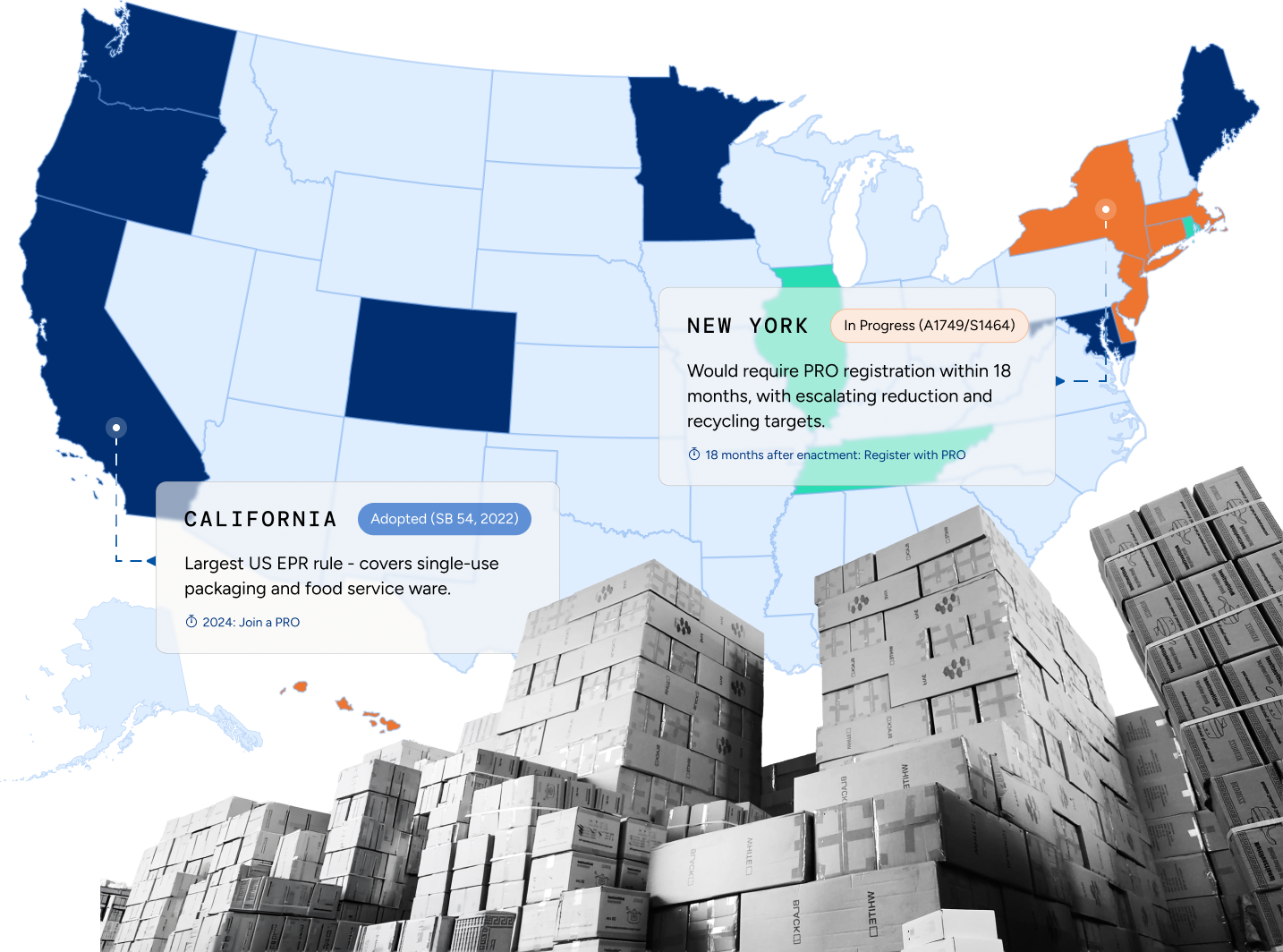
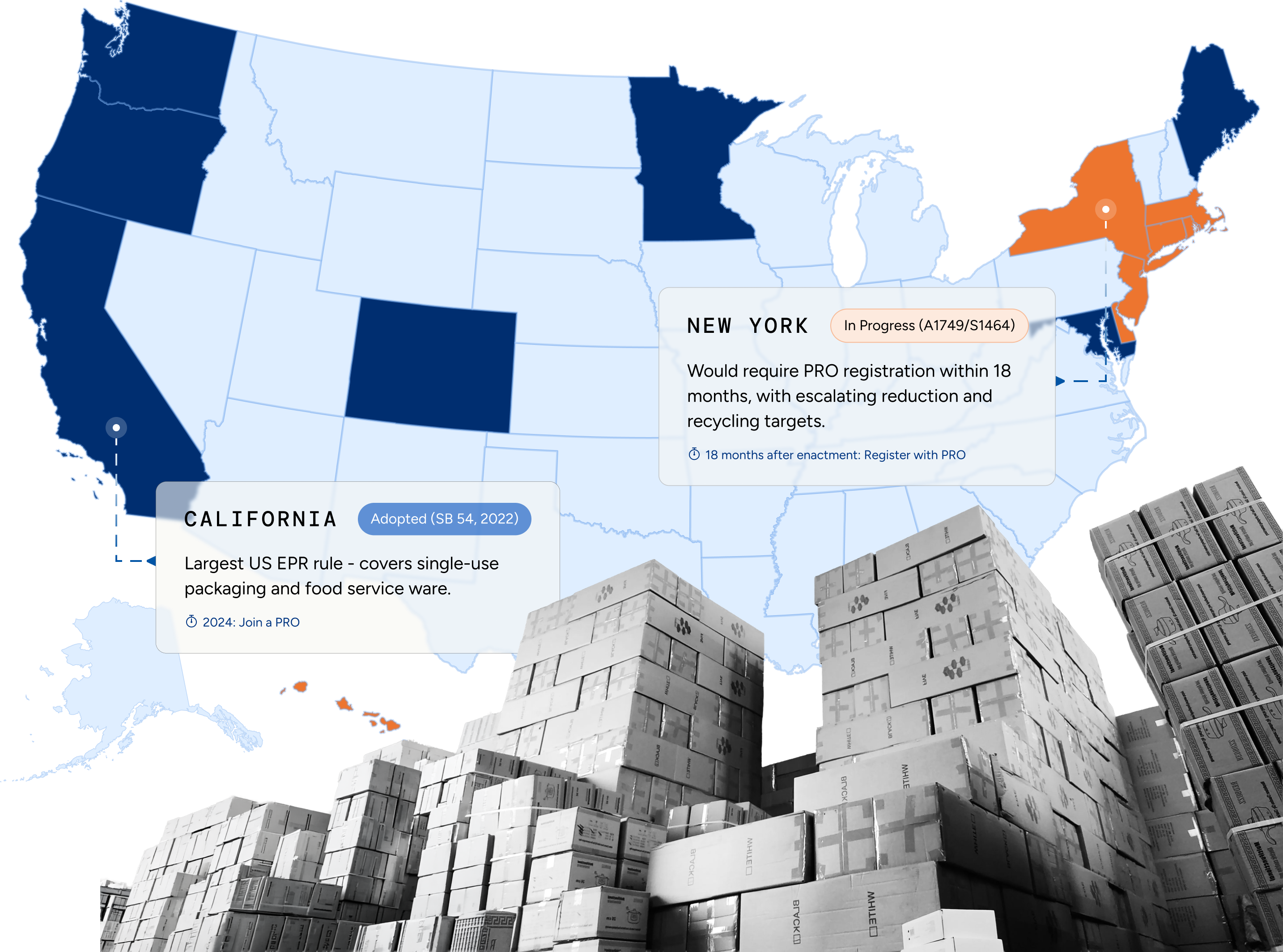
Seven states have active EPR laws, and five more are actively legislating. This isn't coming; it's here.
The fees are real
Oregon and Colorado are already collecting. California goes live in 2027, with fines up to $50,000 per day for non-compliance.

No two states are the same
Seven different rules, different thresholds, different timelines, different data requirements — all running simultaneously.
One dataset, every requirement
The packaging data you build for EPR answers retailer scorecards, EcoVadis, and CDP requests. Build it once, use it everywhere.
$190 million from 3,000 producers
The Circular Action Alliance expects to collect $190 million from roughly 3,000 producers in Oregon alone in year one. Large brands could face $30 million or more annually across all states
Different rules, overlapping data
Oregon, Minnesota, and California all require different data fields. One well-built dataset can satisfy all of them.
Exemption thresholds vary by state
Every state defines who is and isn't covered differently. Getting this wrong in either direction has real consequences.

Eco-modulated fees reward early decisions
Your packaging design choices today directly affect what you pay in 2028 and 2029.
Missing or incomplete data costs money
Building a compliant dataset after your first PRO deadline is significantly more expensive than building it correctly from the start.

Results that hold up when they need to.
Good.Lab's sustainability consultants have guided companies through complex regulatory requirements across industries and frameworks.
of Good.Lab clients have met third-party assurance requirements when their data is externally evaluated
of customers continue working with Good.Lab year over year
covered, with programs built to satisfy multiple requirements simultaneously

Software handles the data. Experts handle the guidance.
Good.Lab was built by sustainability consultants who spent years doing this work manually. We know where the data gaps are, how fee structures get calculated, and what actually matters when a PRO asks for your numbers.
You don't get just a login and ambiguous help center. You get consultants who have done this before, paired with software built to handle the data lift.
EPR isn't the only thing landing on your desk. When other regulatory and supply chain requirements arrive, you won't need to start over with someone new. Need help with reporting your greenhouse gases for California’s SB 253? Or satisfying an EcoVadis or CDP submission for a customer? We’ve got you.


5 steps to EPR mastery.
Good.Lab's EPR Process:
Audit your packaging footprint
Map how much packaging you sell into each EPR state, down to material type and volume. This is your fee exposure baseline, your hotspot map, and the foundation of your PRO registration data.
Centralize your data
Build a single dataset covering material type, weight, recyclability rating, and volume by state. One source of truth is significantly cheaper to maintain than seven separate reporting files.
Engage with a PRO early
Joining the Circular Action Alliance before deadlines gives you more influence over fee structures, more time to redesign packaging before baselines are set, and a lower cost profile from day one.
Redesign your packaging
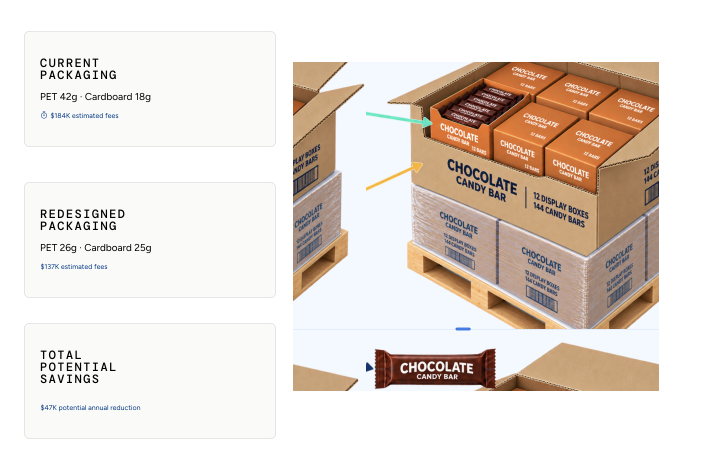
Packaging that uses less material, incorporates post-consumer recycled content, or is designed for recyclability costs less under every active state program. The earlier you start, the more fee cycles you benefit from.
Perfect your data infrastructure
The companies that pay least built their data once, correctly, before the first deadline. Clean data means accurate fees, defensible reports, and no scrambling when the next state goes live.
Long heading is what you see here in this feature section
Learn more about our approach to emerging regulations and including SB 261, SB 263 and complete mandatory reporting with ease.