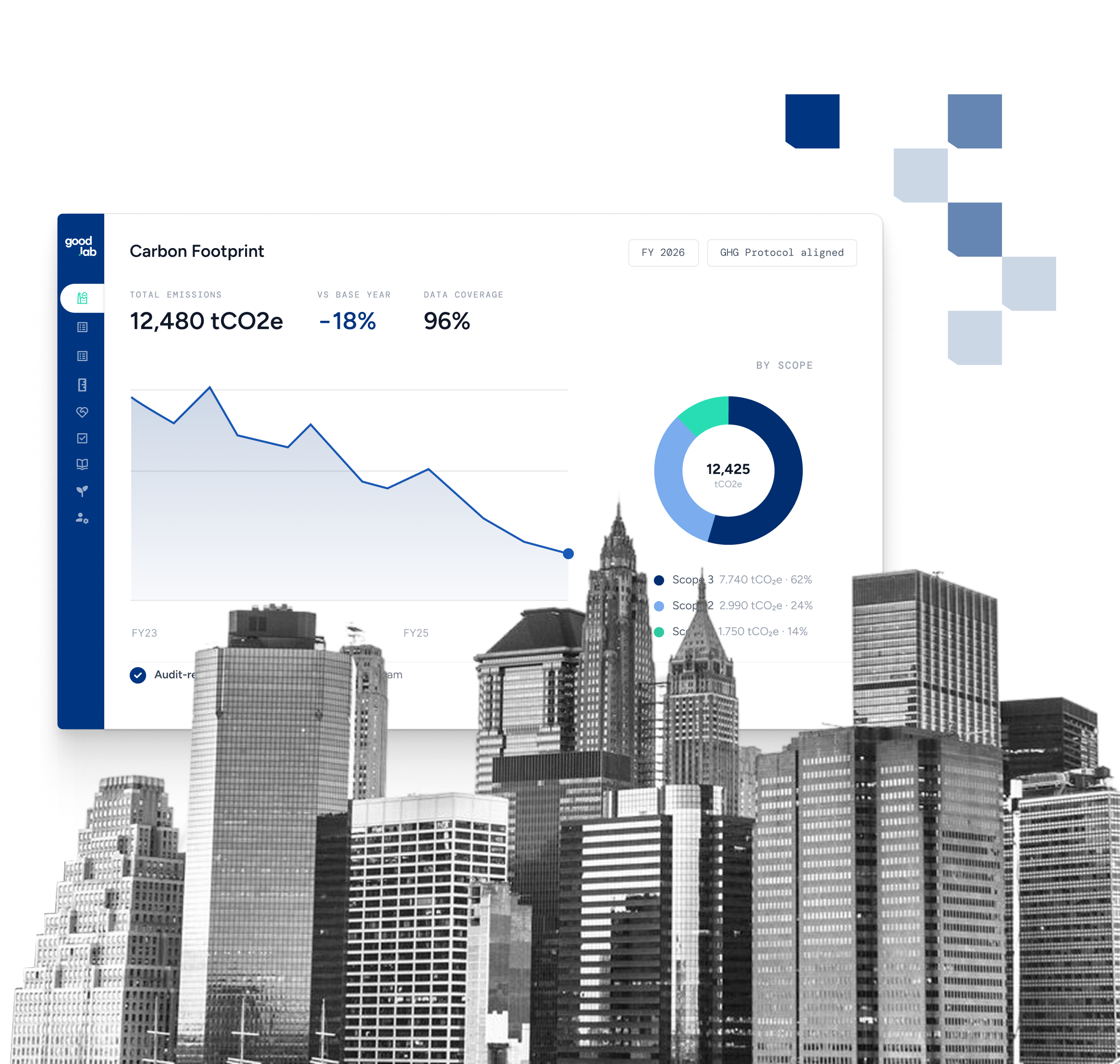
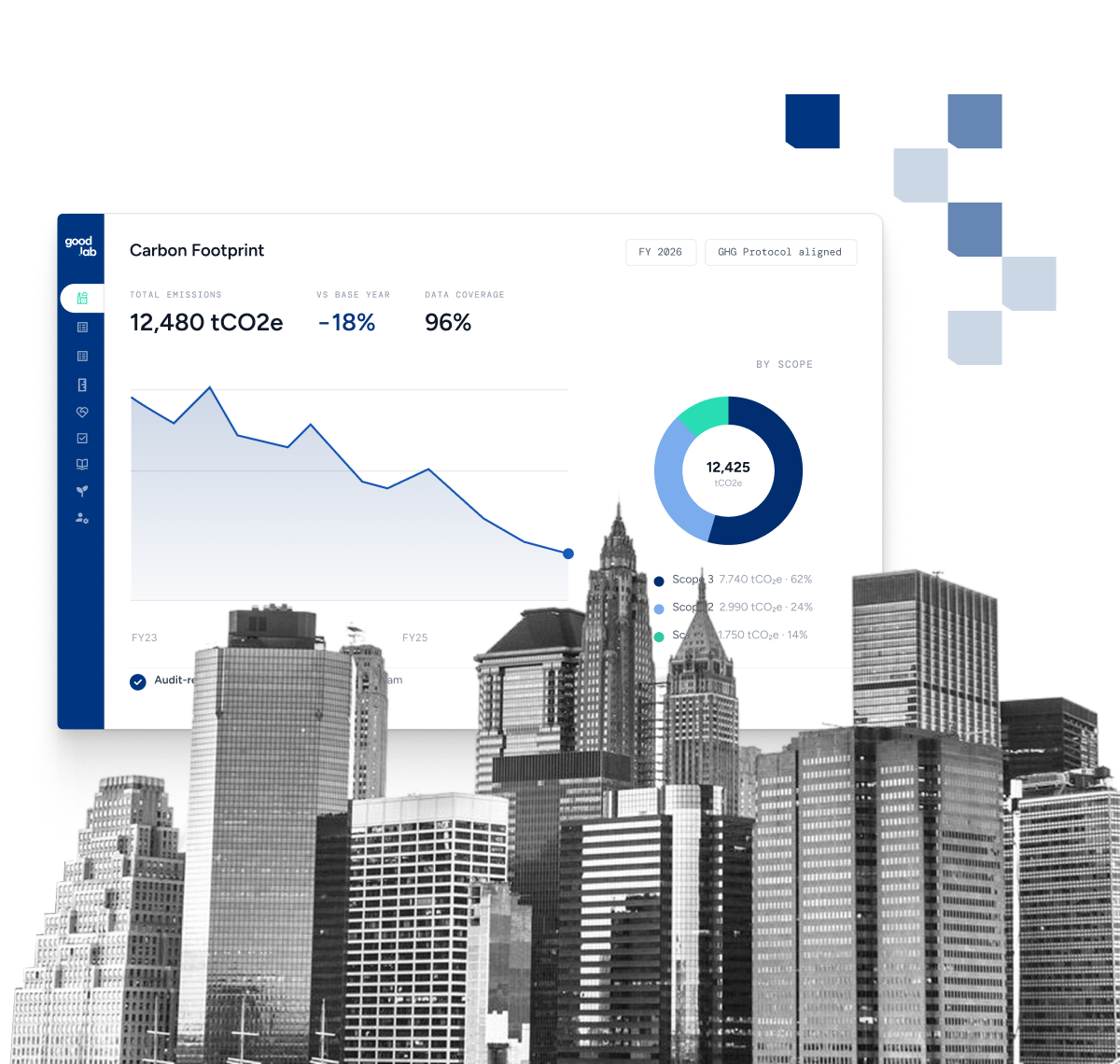
A good decarbonization strategy is built on data you can stand behind.

Good.Lab's consultants help you develop credible, defensible emissions targets, manage the SBTi submission process, and build the data infrastructure to track progress year over year.

Talk to a target-setting expert
Dashboard showing consumption, targets, emissions data, and Science Based Targets logo against forest road background.

End-to-end support for science-based target setting.

Good.Lab helps you set credible, defensible GHG targets, whether you're submitting to SBTi for the first time, revising existing targets, or aligning to customer and regulatory expectations.

prepare

Baseline and inventory

Build a complete, defensible Scope 1, 2, and 3 emissions baseline that holds up to SBTi review and third-party assurance.
SUBMIT

Science-based target development

Model reduction pathways, set targets aligned to SBTi criteria, and manage the submission process from commitment letter through validation.
IMPROVE

Roadmap and reporting

Translate approved targets into a practical reduction plan, with the data infrastructure to track progress and report against it year over year.
TAG

Heading

This is some text inside of a div block.

Credible targets are becoming the cost of doing business.

Customers, investors, and regulators want to know you have a plan. A validated science-based target is the clearest answer.

Regulatory direction

Over 10,000 companies worldwide have committed to or set SBTi-approved targets, and the list is growing fast

Buyer requirements

Major buyers including Walmart, Microsoft, Apple, and Unilever now require science-based targets from key suppliers

Winding road through a dense, misty forest with tall evergreen trees on both sides.

CDP scoring, EcoVadis ratings

A growing number of regulatory frameworks reward validated targets and penalize their absence

Investor scrutiny

Investors increasingly screen for credible transition plans, with target validity treated as a proxy for climate risk readiness

12% per year average reduction

Companies with validated SBTi targets reduced their Scope 1 and 2 emissions by an average of 12% per year between 2020 and 2023, meaningfully ahead of the pace required to meet 1.5°C pathways. Credible targets aren't just paperwork. They drive real reductions.

A target is only as strong as the data behind it.

Most companies don't struggle with the idea of setting a target. The difficulty is building the inventory that supports it and maintaining it year after year.

See how Good.Lab can help

Scope 3 is where most of the work lives.

For most companies, Scope 3 represents 70-90% of total emissions, and SBTi requires it to be measured and included. Getting it right means engaging suppliers and documenting assumptions clearly.

Pathway selection has long-term consequences.

Near-term, long-term, net-zero, FLAG, sector-specific – the right choice depends on your industry and footprint. Changing pathways later is significantly more work than choosing well the first time.

Wet winding road surrounded by dense forest with tall trees and green foliage in misty weather.
Tall stacks of colorful intermodal shipping containers at a port or logistics facility.

Validation is rigorous.

SBTi reviewers check methodology, boundaries, base year, and target ambition. Submissions with gaps come back with feedback, sometimes multiple rounds, before approval.

Year two is where many programs falter.

Companies that built clean data infrastructure during target setting carry it forward easily. Those that didn't rebuild their inventory every year.

Five steps from baseline to validated target.

This is the process Good.Lab takes clients through:

1

Build the baseline

Develop a complete, audit-ready Scope 1, 2, and 3 inventory using GHG Protocol methodology. This is the foundation everything else rests on, so it has to be right the first time.

2

Choose the right pathway

Evaluate near-term, long-term, net-zero, and sector-specific options against your business profile. Make the choice that's both ambitious and achievable, and document the rationale clearly.

3

Model and set targets

Run reduction scenarios, identify where the meaningful levers are, and set targets that meet SBTi criteria without committing to numbers you can't defend operationally.

4

Submit and validate

Prepare the submission package, manage the SBTi review process, and respond to reviewer feedback. Approved targets get announced; you move on to execution.

5

Track and report

Build the data infrastructure to monitor progress year over year, satisfy disclosure frameworks, and adjust course as your business evolves.

Targets that hold up when they need to

Good.Lab's sustainability consultants have guided companies across industries through baseline development, target setting, and SBTi validation.

100%

of Good.Lab clients have met third-party assurance requirements when their data is externally evaluated

90%

of customers continue working with Good.Lab year over year

8+

industries served, from CPG and retail to manufacturing and professional services

Two men having a discussion at a desk with a laptop in a modern office setting.
"Good.Lab has truly lifted a huge burden from our team and saved us invaluable time. Whether it's emissions reporting or navigating evolving regulations, Good.Lab has become a trusted thought partner who helps us plan ahead with confidence."
Kathy Degenhardt, CPA, Senior Vice President of Finance & Controller at Marten Transport

See real results.

Good.Lab helps companies move from 'we want to get to net zero' to a baseline, a plan, and science-based targets they can stand behind.

View all case studies

Software handles the data. Experts handle the strategy.

Good.Lab was built by sustainability consultants who've spent years setting targets, defending baselines to assurance providers, and navigating the SBTi review process. We know where calculations get questioned, which methodologies hold up, and what reviewers are actually looking for.

You don't get a login and a help center. You get SBTi consulting from experts who've done this before, paired with software built to handle the data lift.

Target setting is rarely the only thing on your desk. When CDP, EcoVadis, CSRD, SB 253, or supplier requirements arrive, you won't need to start over with someone new.

See everything we cover
Dashboard showing emissions, water used, energy used, waste produced, total emissions, consumption, and targets data visuals.Infographic showing CO2 emissions by scope and resource usage: water, energy, waste, total emissions.

Long heading is what you see here in this feature section

Learn more about our approach to emerging regulations and including SB 261, SB 263 and complete mandatory reporting with ease.

Talk to an expert

Whether you're starting from scratch or revising approved targets, here's where to begin.

Tell us where you are and we'll tell you what to focus on first.

Talk to a target-setting expert