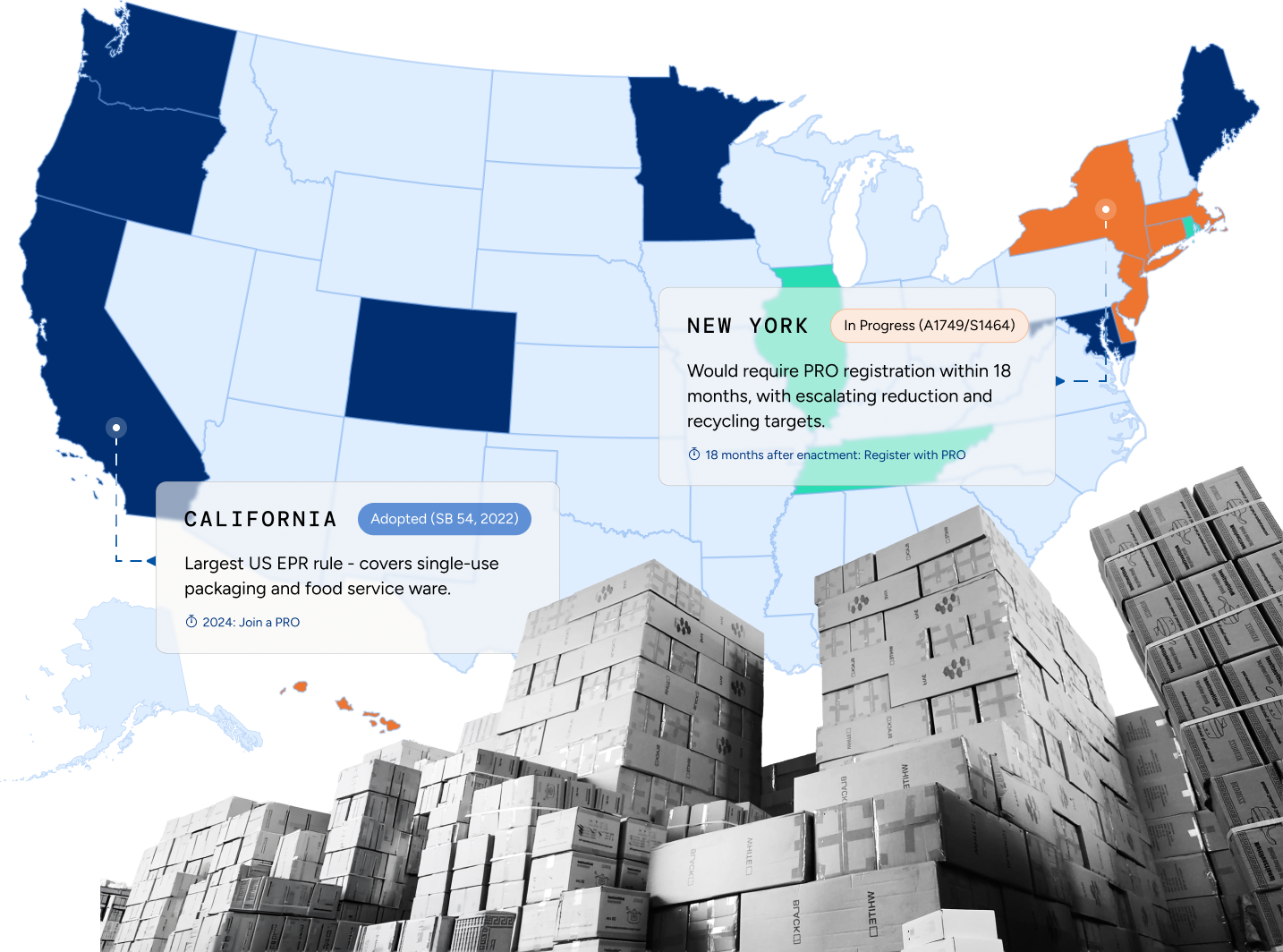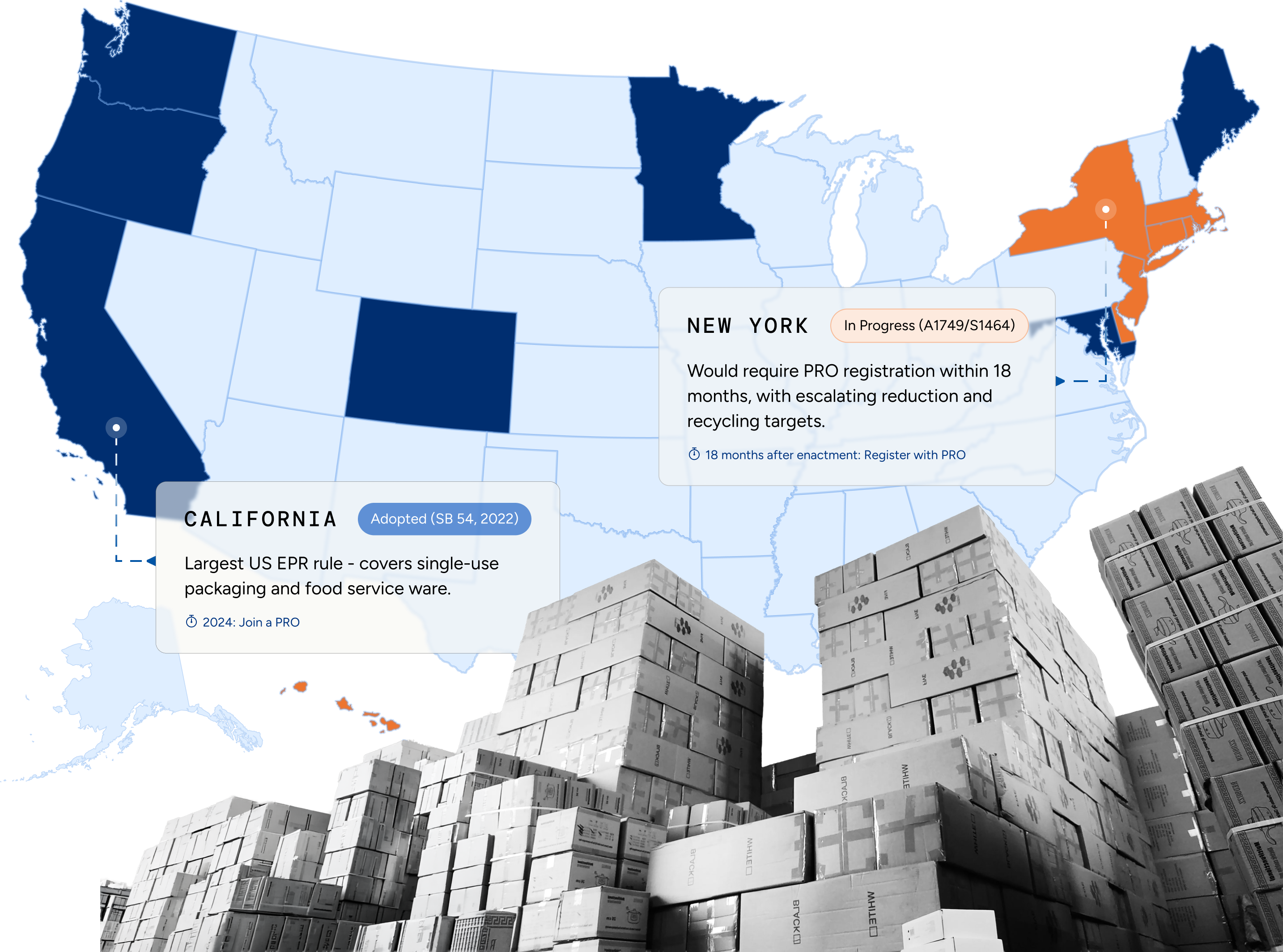








Active states
Five more moving through legislation.
Cap on California fines. Oregon and Colorado already collecting.
Exposure in annual fees for large brands.
Expected cost in fees from 3,000 Oregon producers in year one alone.

"Good.Lab helped us think longer term about our sustainability efforts at TKO. We are now more confident in our ability to talk to suppliers, respond to customers, and manage sustainability requirements going forward."

"Good.Lab has lifted a huge burden from our team, saving us invaluable time.”

"Good.Lab gave us a complete, regulation-ready view of our value-chain impact."

Because it's the law, not a voluntary sustainability initiative. EPR laws shift the cost of packaging waste from governments and consumers onto the companies that produce it, the "polluter pays" principle. If you sell covered products above a state's threshold, registering and reporting isn't optional.
Real penalties, not warnings. California's fines reach $50,000 per day. Oregon's go up to $25,000 per day and can include a state ban on non-compliant products. Some states can also bar you from legally selling in that state at all until you're registered.
Yes, at scale. The Circular Action Alliance expects to collect $190 million from roughly 3,000 producers in Oregon alone in year one. California's fee pool covers $500 million annually across obligated producers. If you sell packaged products into these states, you're already in the same pool as most of your competitors.
We would start with an obligation map: we figure out which states you're actually covered in based on where you sell and how much packaging you move. Most companies find they're covered in different places than they assumed.
Possibly. Exemption thresholds differ by state and aren't based on the same numbers. We check your actual volume and revenue against each state's specific rule, so you know for certain instead of guessing.
It's fixable. We prioritize getting you compliant now and building the dataset you'll need going forward, rather than treating a missed date as a lost cause.
Yes, most states require annual reporting. We build your dataset correctly the first time, so each year after is faster and cheaper, not harder.